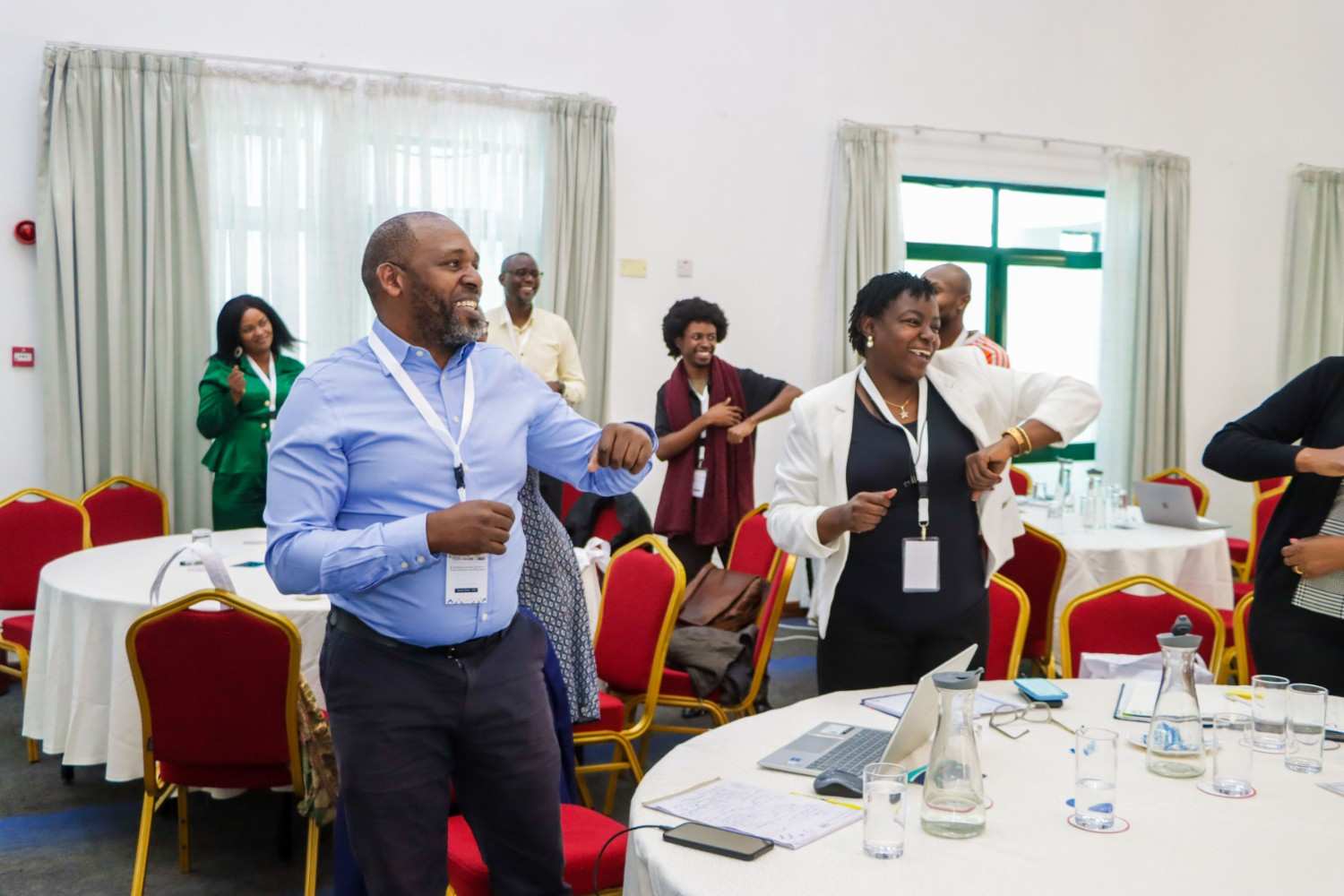
The Nairobi Education Symposium 2026, part of Brookings' Global Symposium Series, gathered researchers, practitioners, policymakers, funders, and youth from across Africa and beyond. Over a full day of plenary sessions, five Deep Dive Workshops, and two rounds of Learning Circles, a clear message emerged: while education systems in the region have strong policy frameworks and an expanding evidence base, real progress hinges on bridging the gap between stated values and everyday practices.
Five priorities for stakeholders
Five priorities emerged for stakeholders across the sector. Children, youth, and families should be regarded as true partners in education, rather than mere beneficiaries of decisions made for them. Closing the gap between declared policy values and the reality of implementation requires deliberate and ongoing effort. Resources and metrics should be shifted toward underfunded areas, such as climate education and locally driven research. Strengthening African and local ownership of research, data, and solutions is essential. Additionally, fostering sustainable, trust-based collaboration through Whole School Approaches, ecosystems, and distributed leadership is vital, moving away from isolated, single-actor initiatives.
Youth voice at the centre
Transforming education involves changing policies, institutions, relationships, mindsets, and governance, not just small programme updates. Central to this transformation are young people's lived experiences, with learners seen as active contributors to system reform rather than passive recipients. Education should equip them for life, focusing on critical thinking, financial literacy, and adaptability, not just exams.
This is where the Collaborative Research and Action (CRA) framework, developed with the Knowing Doing Network, takes shape: a living framework that evolves through learning and collaboration across contexts, built on the premise that no single institution can transform education systems alone.
Some 156 participants from Kenya, Tanzania, Uganda, Nigeria, Ghana, Rwanda, Vietnam, Mexico, and the USA echoed this premise. Rather than simply producing evidence, collaborative research creates ownership, relationships, and trust, the elements that form the foundation of systems transformation. However, a tension remains around how much genuine autonomy African researchers can exercise while funding still originates externally..
The workshops
Each of the five Deep Dive Workshops examined a different facet of systems transformation. Family and youth engagement is already strong, but much of it remains invisible to schools, with structural barriers such as poverty and transport, rather than lack of interest, posing the greatest obstacle. On girls' agency, the discussion centred on moving beyond simply collecting information from girls toward engaging them in analysing evidence and deciding what action to take. A study of narratives of change across India, Peru, and South Africa found that learner voice is systematically absent from education systems, summarised as "See me, hear me, and make learning relevant to my life."
On ecosystem building, trust was identified as the defining characteristic of a healthy ecosystem, with governments encouraged to act as partners from the outset rather than recipients of finished plans. On locally led research, the clearest lesson was to prioritise quality of collaboration over the number of collaborators, and to maintain transparency throughout rather than only at the end.
The learning circles
The Learning Circles grounded these ideas in practice. On assessment, examinations were described as one form of assessment among many, not the whole of it. On ecosystem building, a shift from "mouth-led" to "ears-led" engagement was proposed: understanding local priorities before designing interventions. On value-based education, Kenya's Competency-Based Curriculum was found to have strong policy backing, but embedding remains weak due to an absence of adult role modelling, prompting new investment in teacher training colleges.
On climate change, schools are already affected through extreme weather, resource scarcity, and eco-anxiety, with debate over whether schools or governments should lead the response. On AI in education, participants agreed AI should augment, not replace, human learning, and that Africa should shape AI rather than only consume it.
A second round of circles addressed research and evidence, arguing that Africa must lead its own education research agenda based on local realities. On access and equality, country evidence from Peru, Ethiopia, and the Democratic Republic of the Congo showed that physical access does not guarantee equal participation.
The threads that tied everything together
Several themes recurred across all sessions. Voice and agency: children, youth, girls, and families are formally included in education systems but rarely hold real influence over decisions.
The say-do gap: a distance between stated values and lived practice surfaced in nearly every session.
What isn't measured isn't funded: systems tend to reward what is easy to measure, at the expense of what matters.
Local and African ownership: the most consistent demand across the symposium, from research funding to AI governance.
Collaboration as the shared mechanism: sustainable change requires trust, distributed leadership, and shared ownership, not single-actor solutions.
Access without equality: expanding enrolment or resources does not automatically translate into equitable participation for marginalised learners.
Moving forward
Stakeholders were encouraged to institutionalise youth, family, and girls' co-authorship in programme design and policy; to invest upstream in role modelling and teacher preparation; to redirect funding toward climate-resilient infrastructure, African-led research, and girls' agency programming; to strengthen local and African research ownership; to build ecosystem infrastructure deliberately rather than through one-off consultations; and to close the access-equality gap explicitly when expanding access to education.
A shared throughline
Across the plenary, the workshops, and the learning circles, the symposium converged on one message.
African education systems already have the policy frameworks, evidence, and early wins needed to transform learning.
What remains is closing the gap between what these systems say they value and what they practise, by shifting real authorship, funding, and trust toward the children, families, teachers, and researchers closest to the problem.